


How Long Will a Hyundai Santa Fe Last?
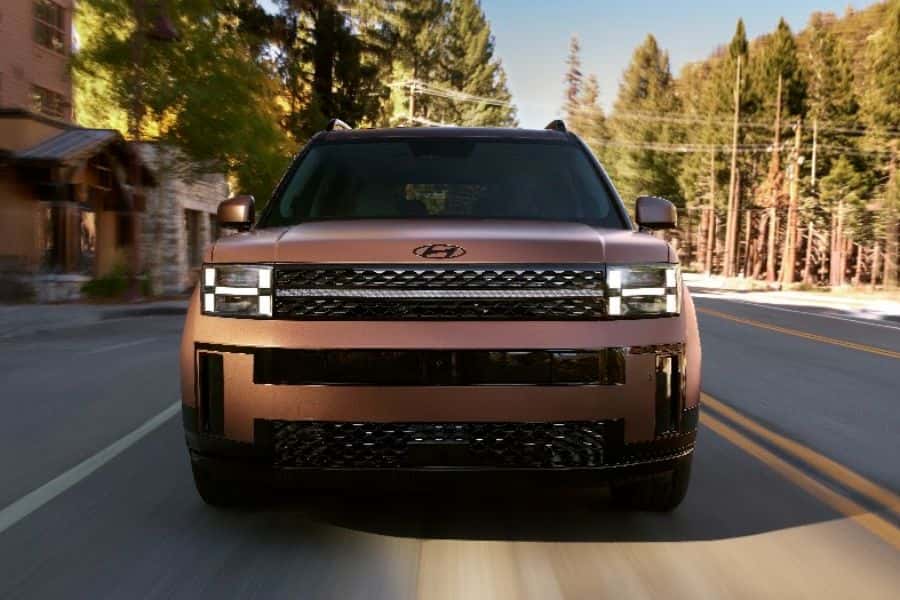
An exceptionally well-maintained Hyundai Santa Fe can potentially reach 200,000 miles or more, and some vehicles may continue toward 250,000 miles or beyond. That level of longevity isn’t guaranteed, though. A specific Santa Fe’s lifespan depends on its model year, powertrain, maintenance history, driving conditions, and whether developing problems get addressed before they become major repairs.
This guide covers what actually drives Santa Fe longevity, what changes as mileage climbs toward 100,000, 150,000, 200,000, and 250,000 miles, and how gas and Hybrid models compare for long-term ownership.
How Long Can a Well-Maintained Hyundai Santa Fe Last?
There’s no fixed expiration mileage built into a Santa Fe. For a well-maintained individual vehicle, ownership may progress through 100,000 miles, then 150,000, then 200,000, and potentially past 250,000.
The likelihood of continued service depends increasingly on actual condition as mileage rises: maintenance history, model year, powertrain, driving environment, accident history, age-related wear, and whether maintenance was preventive or reactive. Reaching 200,000 miles doesn’t mean a Santa Fe needed zero repairs along the way. A long-lasting vehicle can still require normal repairs and component replacement while remaining mechanically viable overall.
Can a Hyundai Santa Fe Last 200,000 Miles?
Yes. With exceptional maintenance and a favorable vehicle history, an individual Hyundai Santa Fe can potentially reach 200,000 miles or more. That’s a high-mileage achievement, not a manufacturer-guaranteed lifespan.
Several habits increase the odds of getting there: consistent oil and filter maintenance, proper cooling-system care, following powertrain-specific requirements, replacing wear items before they create secondary problems, addressing leaks and warning lights promptly, and completing recalls and service campaigns. None of that makes 200,000 miles automatic for every Santa Fe. It’s what improves the odds for the vehicle that gets it.
Going beyond 200,000 miles, toward 250,000 or more, is possible for an individual Santa Fe, but it’s an exceptional outcome, not the expected lifespan of every vehicle. By this point, keeping a Santa Fe on the road usually involves more than routine oil changes. Owners reaching this mileage have often replaced or serviced items like suspension components, cooling-system parts, sensors, engine mounts, wheel bearings, batteries, and brakes. Longevity doesn’t mean zero repairs. It means the vehicle stays safe, serviceable, and economically reasonable to keep operating.
Is the Hyundai Santa Fe Reliable Enough for High-Mileage Ownership?
RepairPal Santa Fe Reliability
RepairPal rates the Santa Fe 4.0 out of 5.0, ranking it 2nd out of 26 midsize SUVs and above average. Its average annual repair cost runs about $515, versus roughly $573 for midsize SUVs generally, with about 0.24 unscheduled shop visits a year and a 10% chance a repair turns out severe.
Current J.D. Power and Consumer Reports Reliability
The 2026 Santa Fe earned an 81/100 “Great” Quality & Reliability score from J.D. Power, ranking third in its segment. Consumer Reports takes a more measured view, predicting “about average” reliability based on 2024 and 2025 Santa Fe data. Both figures reflect model-wide, current-generation data, not a guarantee for any one vehicle.
What Do We Know About the Current-Generation Santa Fe’s Longevity?
The current Santa Fe generation launched for the 2024 model year, so it’s still relatively new. Current reliability indicators show how these newer models are performing so far, but they can’t yet prove 15 to 20 years of real-world longevity the way an older generation can. That proof only comes with time on the road.
Does a Santa Fe Hybrid Have the Same Lifespan Potential?
The Santa Fe Hybrid uses a different powertrain architecture than the gas Santa Fe, so it doesn’t automatically share identical maintenance or longevity expectations. Conventional engine maintenance still matters, and its hybrid-system components have their own service requirements on top of that.
One concrete difference: Hyundai’s 10-year/100,000-mile Hybrid Battery warranty transfers to subsequent owners, unlike the standard powertrain warranty, which is original-owner-only. As a newer addition to the lineup, the Hybrid has less long-term high-mileage history than older gas Santa Fe generations, and there isn’t current evidence that hybrid ownership means a longer lifespan, a shorter one, or lower repair costs over 200,000 miles.
What Does It Take to Get a Hyundai Santa Fe to 200,000 Miles?
Reaching high mileage comes down to consistent habits more than any single trick.
- Follow the exact Hyundai schedule for your Santa Fe, by model year, engine, and driving conditions, rather than a generic interval.
- Stay consistent with engine oil maintenance. Lubrication and contamination control directly affect wear across 100,000-plus miles.
- Protect the cooling system, which matters even more in hot climates.
- Follow powertrain-specific fluid requirements from your Owner’s Manual, not a flat 60,000-mile transmission-fluid rule.
- Address small problems early, including warning lights, leaks, overheating, unusual noises, odd shifting, or performance changes.
- Replace wear items as necessary. A 150,000- to 250,000-mile Santa Fe will naturally need components replaced, which doesn’t mean poor longevity.
- Check recalls and service campaigns by VIN through Hyundai or NHTSA, and keep detailed service records as mileage climbs.
Worth knowing: current-generation Santa Fe engines (2019 and newer) use timing chains, not belts, with no scheduled replacement interval the way older belt-driven engines needed. Earlier generations did use belts, so that’s a generation-specific detail, not something that applies to every Santa Fe on the road.
What Should You Expect as a Santa Fe Gets More Miles?
Around 100,000 Miles
This doesn’t put a Santa Fe near the end of its life. Review complete maintenance history, scheduled service status, the cooling system, fluid condition, brakes, tires, suspension, steering, battery and electrical health, leaks, warning lights, recalls, and overall powertrain operation.
Around 150,000 Miles
Maintenance history and age-related components carry more weight here. A comprehensive inspection tends to be more valuable than reacting to individual problems as they surface.
Around 200,000 Miles
This is high-mileage territory. Continued ownership should increasingly depend on actual mechanical condition, repair history, upcoming maintenance, safety, and the cost of repairs relative to the vehicle’s value, not mileage alone.
Around 250,000 Miles and Beyond
Treat this as exceptional longevity. Condition matters more than the odometer by this point, and no owner should expect continued reliability indefinitely.
Is 100,000 Miles High for a Hyundai Santa Fe?
It’s meaningful mileage, but it doesn’t automatically make a Santa Fe unreliable or near the end of its usable life. For a well-maintained vehicle, 100,000 miles can be an important maintenance milestone rather than an automatic replacement point.
For used-Santa-Fe shoppers, check service records, model year, powertrain, accident and ownership history, open recalls, engine and transmission behavior, cooling-system condition, leaks, suspension, tires, and brakes. An independent pre-purchase inspection tells you far more than mileage alone.
Does the Santa Fe Model Year Affect How Long It Can Last?
Yes. Santa Fe generations use different engines and transmissions, and powertrain options have changed substantially over time. Known issues and maintenance requirements vary by generation, and newer generations naturally have less long-term data behind them.
One documented example: NHTSA recall 20V-746 covers 2012 Santa Fe models built with 2.4-liter Theta II MPI engines between January and July of that year, tied to a risk of premature connecting rod bearing wear. That’s a specific, sourced issue tied to a narrow production window, not a reason to write off an entire model year, and it doesn’t apply to the current generation’s engines. If you’re weighing a newer model year against keeping your current Santa Fe longer, our new Hyundai inventory shows how today’s lineup compares.
What Problems Can Affect Santa Fe Longevity?
Not every issue you’ll read about applies the same way. A recall, a service campaign, an owner complaint, a common repair, and a routine wear item are all different things worth keeping separate. The 2012 Theta II recall above is a real, documented recall tied to a specific engine and production window. It doesn’t mean every older Santa Fe shares that risk, and it has no bearing on the current generation. The goal is identifying what’s worth addressing early, not building a list to fear.
Helping a Hyundai Santa Fe Last in Southern Utah
Findlay Hyundai St. George serves drivers across Washington, St. George, Hurricane, Santa Clara, Ivins, and the rest of Southern Utah, and the local driving environment genuinely affects how a Santa Fe ages. High summer temperatures strain the cooling system, dust works into filters faster than in milder climates, and highway travel plus mountainous terrain toward Snow Canyon add wear a suburban commute wouldn’t.
Hyundai classifies dusty, sandy, and mountainous driving as severe usage, which can shift which schedule applies. If your driving includes unpaved roads, steep grades, or extended heat exposure, it’s worth checking whether the normal or severe schedule fits your Santa Fe.
Is a Hyundai Santa Fe Expensive to Maintain Long Term?
Based on RepairPal’s model-wide data, a Santa Fe’s average annual repair cost runs about $515, compared with roughly $573 for midsize SUVs generally. That figure spans multiple model years and ownership situations, not a prediction of what a specific 200,000-mile Santa Fe will cost.
As any vehicle accumulates mileage, repair costs become less predictable. Owners pursuing 200,000-plus miles should expect maintenance and occasional component replacement as a normal part of ownership, not a sign something went wrong. Our Hyundai Service Center can walk you through what a specific repair or upcoming service actually costs before you decide.
Hyundai Santa Fe Warranty Coverage
A new Santa Fe carries Hyundai’s standard coverage: a 5-year/60,000-mile New Vehicle Limited Warranty, a 10-year/100,000-mile Powertrain Limited Warranty, 5 years of unlimited-mile roadside assistance, and a 7-year/unlimited-mile anti-perforation warranty.
The full 10-year/100,000-mile Powertrain Limited Warranty generally applies to the original owner, with subsequent owners typically receiving reduced coverage from the original in-service date. Santa Fe Hybrid models differ: their 10-year/100,000-mile Hybrid Battery warranty transfers to subsequent owners instead of resetting. Confirm exact coverage through Hyundai’s documentation or contact our team to check a specific VIN.
A warranty ending isn’t the same as a vehicle reaching the end of its life. It just means an owner is now covering repairs instead of Hyundai.
Hyundai Santa Fe Lifespan FAQs
How long will a Hyundai Santa Fe last? An exceptionally well-maintained Santa Fe can potentially reach 200,000 miles or more, depending on model year, powertrain, maintenance history, and driving conditions.
How many miles can a Hyundai Santa Fe last? There’s no fixed number. With consistent maintenance, a Santa Fe may progress well past 100,000 miles toward 200,000 and, for some individual vehicles, beyond.
Do all Hyundai Santa Fes reach 200,000 miles? No. Reaching that mileage depends on the individual vehicle’s maintenance history, powertrain, and driving conditions. Some Santa Fes fall well short, while others exceed it by a wide margin under exceptional care.
Can a Hyundai Santa Fe last 250,000 miles? It’s possible for an individual Santa Fe with exceptional care and ongoing repairs, but it’s an exceptional outcome, not the norm for Santa Fe ownership.
Is 100,000 miles high for a Hyundai Santa Fe? It’s meaningful mileage, but it doesn’t mean a Santa Fe is near the end of its life. Condition and maintenance history matter more than the odometer.
Are Hyundai Santa Fes reliable? RepairPal ranks the Santa Fe 2nd among 26 midsize SUVs at 4.0 out of 5.0. J.D. Power gives the 2026 model an 81/100 “Great” score, while Consumer Reports predicts about average reliability.
How can I make my Hyundai Santa Fe last longer? Follow the Owner’s Manual schedule, stay consistent with oil changes, protect the cooling system, address problems early, replace wear items as needed, and keep service records.
Does the Santa Fe model year affect reliability? Yes. Engines and known issues have changed across generations. NHTSA recall 20V-746 covers 2012 Santa Fe models with certain Theta II engines, which doesn’t apply to the current generation.
How long can a Santa Fe Hybrid last? The Hybrid shares the same high-mileage potential with proper care, though it has less long-term history than older gas Santa Fe generations, since the current hybrid lineup is still relatively new.
Is a high-mileage Hyundai Santa Fe worth buying? It can be, provided you verify complete service history, check for open recalls by VIN, and get a pre-purchase inspection over relying on mileage alone.
How often should a Hyundai Santa Fe be serviced? Intervals vary by model year, engine, and driving conditions, so check your Owner’s Manual. Dusty, mountainous, or extreme-heat driving may qualify as severe usage and call for more frequent service.
What should I inspect on a Santa Fe with more than 100,000 miles? Check the cooling system, fluid condition, brakes, tires, suspension, battery health, any leaks, active warning lights, and open recalls, alongside the full service history.
Find Your Next Hyundai Santa Fe at Findlay Hyundai St. George
Whether you’re deciding how much longer to keep your current Santa Fe or shopping for one ready to go the distance, our team at Findlay Hyundai St. George, located at 1145 E Twin Rocks Cove in Washington, UT, can help. We work with drivers across Washington, St. George, Hurricane, Santa Clara, and Ivins, including the heat and highway miles that make routine maintenance worth staying on top of.
Browse our new Hyundai Santa Fe inventory, explore our pre-owned Hyundai SUVs, or schedule Hyundai service to keep the one you already own running strong.
1 comment(s) so far on How Long Will a Hyundai Santa Fe Last?
My Santa Fe is 20 years old , 124 000 miles